






PERMITTED DEVELOPEMENT RIGHTS
The Government of England has set up rules for Permitted Development, allowing specific home extensions to be built without requiring planning permission.
Our designs comply with England’s permitted development rights, so you can purchase a pre-designed option that adheres to all the regulations, saving you the trouble and expense of hiring an architect. For the most recent government guidelines on permitted development, please follow the link.
Some extensions are classified as “permitted development” and are approved by the government instead of your Local Planning Authority.
It’s essential to understand that these rights are applicable to houses but do not extend to
FLATS
MAISONETTES
OR OTHER BUILDING TYPES
Additionally, commercial properties have different permitted development rights than residential ones.
In certain regions, commonly referred to as ‘designated areas,’ the permitted development rights are more limited.
If you reside in:
A CONSERVATION AREA
A NATIONAL PARK
AN AREA OF OUTSTANDING NATURAL BEAUTY
A WORLD HERITAGE SITE
OR SOME NEW BUILD DEVELOPMENTS
you will need to seek householders planning permission for specific types of work that may not require an application in other locations. Additionally, there are unique requirements if your property is a listed building. We highly recommend reaching out to your Local Planning Authority to discuss your plans before starting any work.
You can get details about any possible limitations on your development and find out if you need to seek planning permission for your home project, either in full or in part.
Now, what can you construct under permitted development?
A PORCH
SINGLE-STOREY REAR EXTENSION
SINGLE-STOREY SIDE EXTENSION
TWO-STOREY REAR EXTENSION
LOFT CONVERSIONS
GARDEN ROOM OR OFFICE
GARAGE CONVERSIONS
OUTBUILDINGS AND GARAGES
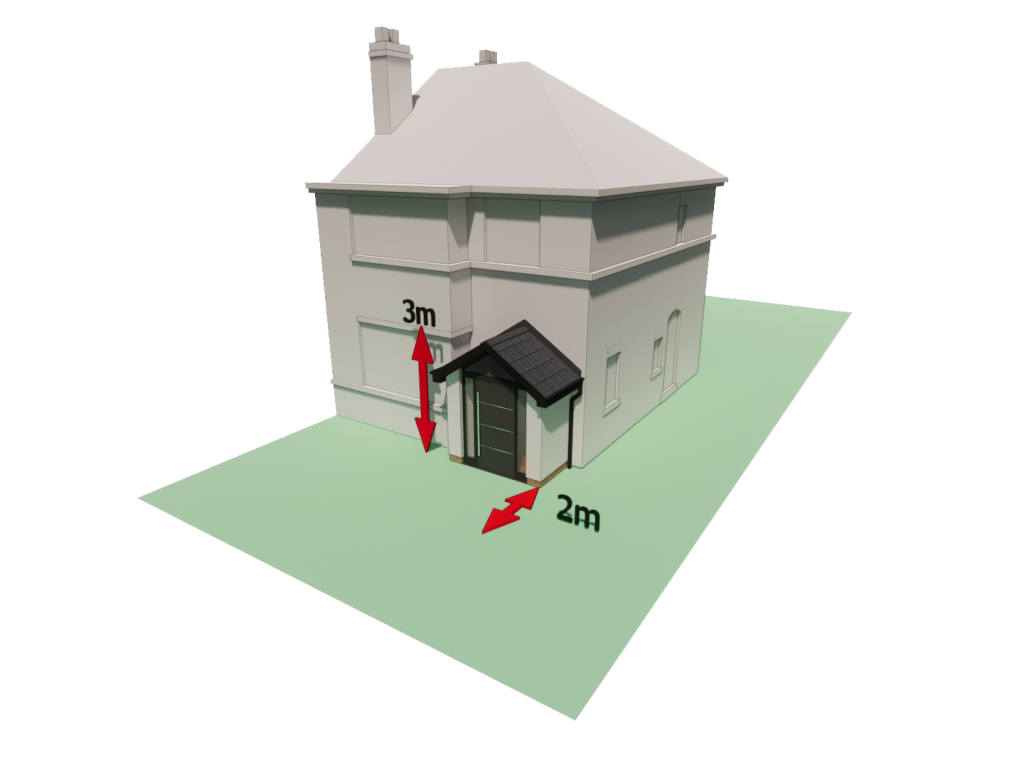
Under the Householders Permitted Development rights, you have the option to build a porch at the front of your home using materials that are either the same as or similar to those of your existing property, all without needing prior notice or planning permission.
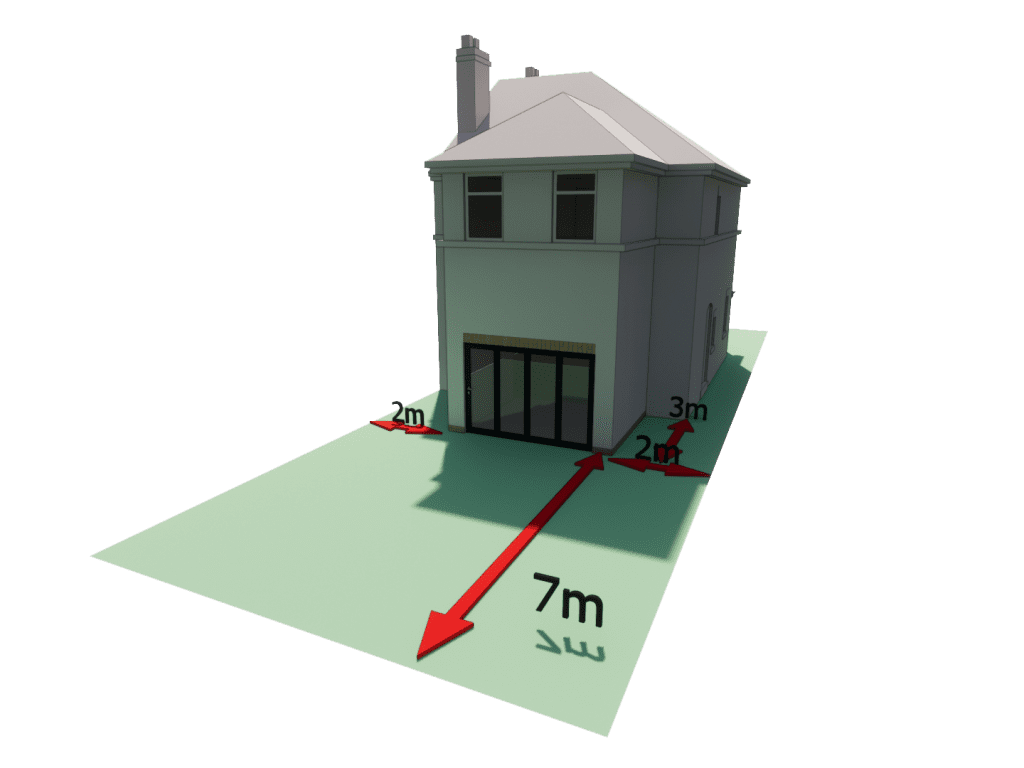
Generally, the porch should be situated near the front door and must not cover more than 3 square meters of external space.
Moreover, the height of the porch roof should not exceed 3 meters, regardless of whether it has a duo pitched, mono pitched, or flat design, and it should be at least 2 meters away from any public road or footpath.
Your new porch should also ensure that it does not interfere with your current parking situation or decrease the number of off-street parking spaces available.
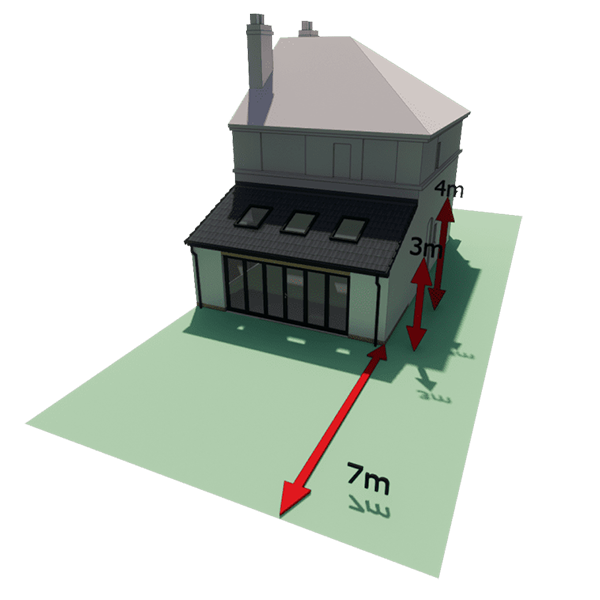
A single-storey rear extension can be built under Householders Permitted Development rights without needing prior notification. However, there are specific guidelines to adhere to. If the extension is attached to another house, it must not extend beyond the rear wall of the existing home by more than 3 meters, or 4 meters if it stands alone. The materials used should closely match those of the current house.
Moreover, the extension’s size should not surpass 50% of the land surrounding the original house. The “original” house refers to its state when it was first built or, for properties constructed before 1948, its condition as of July 1, 1948. The height of the extension should be under 4 meters, or under 3 meters if it is within 2 meters of a property boundary. The eaves and ridge height must not exceed those of the existing structure.
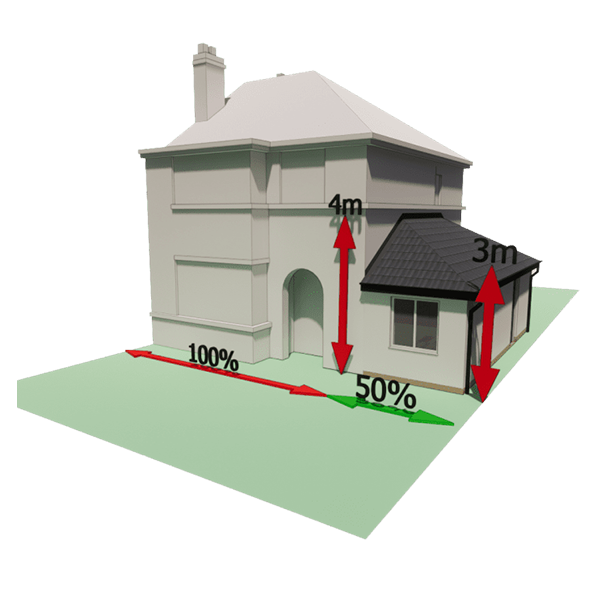
You can build a side extension under Householders Permitted Development rights without needing to give prior notice. This extension should be placed next to the house, provided its length does not face a road. It’s important to use building materials that match those of the existing home. The extension’s size must be less than 50% of the land surrounding the original house, with “original” referring to the property’s latest state when it was constructed or, if it was built before 1948, as it was on July 1, 1948. Additionally, the width of the extension should be less than 50% of the original house’s width.
The height of the side extension must not exceed 4 meters, or 3 meters if it is within 2 meters of a property boundary. The eaves and ridge of the extension should also be no taller than those of the existing house.
A two-storey rear extension can be built under Householders Permitted Development rights without needing prior notification. It’s essential to remember that this extension must not include any windows on the side elevation’s wall or roof slope for the upper floors. Additionally, it should take up less than 50% of the original house’s width and less than 50% of the land surrounding it. The term “original” refers to the property’s most recent state when it was constructed or, for properties built before 1948, its condition as of July 1, 1948.
To comply with regulations, the extension should use materials that match the existing house and have eaves and a ridge height that does not exceed that of the current structure. For terraced homes, the extension’s height must not surpass 3.5 meters above the height of the adjacent terrace. It’s also important to note that single-storey homes cannot take advantage of this type of extension.
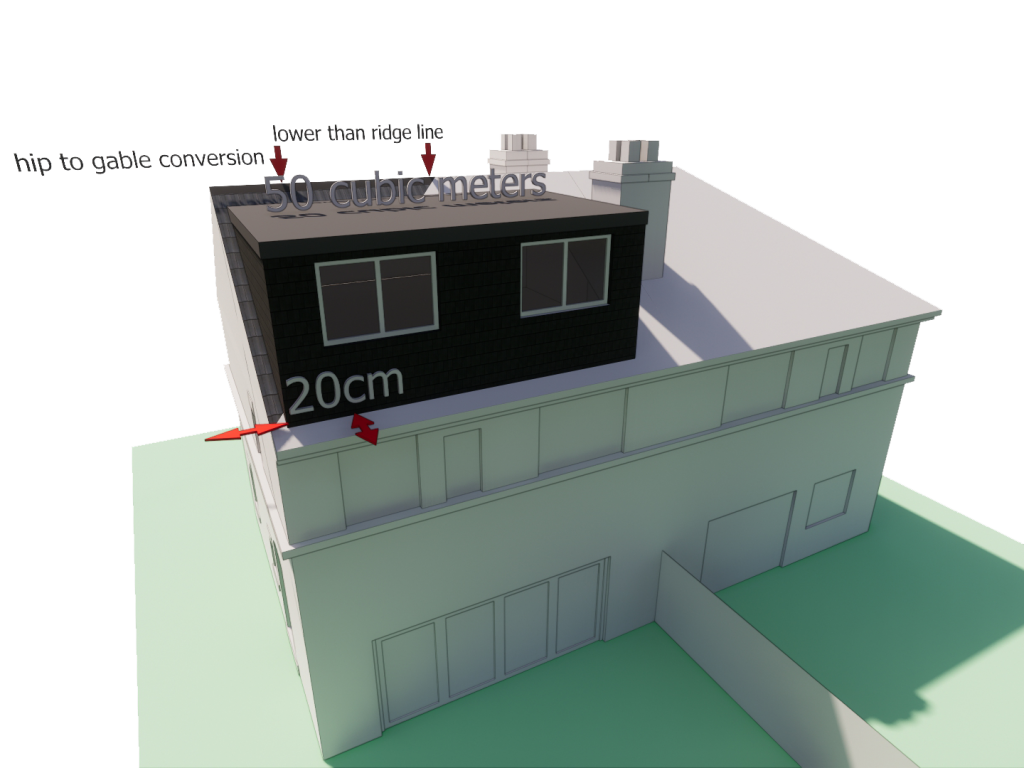
Loft conversions are covered by permitted development rights, enabling homeowners to transform their loft spaces without needing prior approval. It’s essential to use materials that match the existing structure. For detached and semi-detached homes, you can add up to 50 cubic meters to the current roof space. This can be done through a dormer extension at the back or a hip-to-gable conversion on the side.
In the case of terraced houses, the allowable increase is 40 cubic meters. It’s crucial to remember that no windows should be placed in the roof slope of the side elevation of the house. However, any windows in the gable ends must be obscured or frosted and installed at a height of 1.7 meters from the floor. Furthermore, dormer walls need to be set back at least 20cm from the existing wall and 20cm from the eaves.
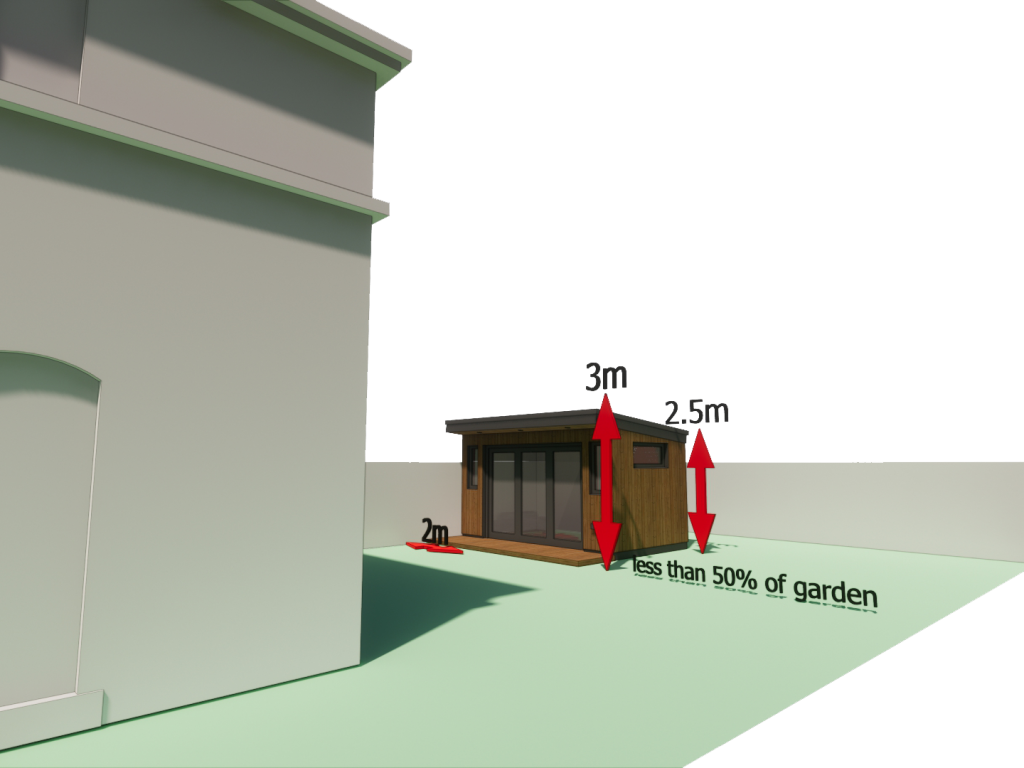
When considering a garden room or home office, it’s essential to follow certain regulations. The structure must be a single-storey building with an eaves height not exceeding 2.5 meters from the ground. Depending on its design, the maximum height can reach up to 4 meters for a gable roof or 3 meters for other styles. However, if you’re planning to build within 2 meters of your property line, the total height, including the roof, must stay below 2.5 meters unless you secure planning permission.
Additionally, there are restrictions on how much of your land can be developed without planning permission. You cannot build on more than 50% of the area surrounding your original house, which includes any extensions or outbuildings added since 1948, regardless of ownership history. It’s also important to remember that constructing a garden room at the front or side of your home requires planning permission, and it should not be closer to the public road or footpath than the main house.
While you can use a garden room for everyday activities without needing planning permission, overnight stays or using it as a self-contained living space is not allowed.
This convenient document serves as proof that your project was legally compliant during its construction phase and is a valuable tool for engaging your local planning department in reviewing your designs. Additionally, it is common for potential buyers to request documentation regarding any improvements you have made, as they want to ensure they do not inherit any legal issues.
All homes in the UK must adhere to building regulations, which encompass a range of statutory requirements covering aspects such as the structure, thermal performance, soundproofing, drainage, and fire safety, among others.
To ensure that your project aligns with UK building regulations, we recommend commissioning a set of technical drawings for your proposed construction. These detailed instructions will provide your contractor or builder with guidance on meeting all legal requirements.
This package can be prepared by an us, Yorkshire Property Design Services, but may also require input from other specialised professionals, including a structural engineer, party wall surveyor, and CCTV drainage surveyor.
With the expertise of these professionals, you can ensure that your contractor or builder has a comprehensive plan to work from, minimizing the risk of errors during the construction process.
This link will prompt you to choose the appropriate Local Planning Authority or the site of your development. It can also help you pick the right type of form if needed. Along with a printable PDF application form, you’ll receive links to a guidance note and helpful text that walks you through each question.
This link is not an authoritative interpretation of the law, but intended as a general guide. It aims to explain in simple terms how the Party Wall etc. Act 1996 (“the Act”) may affect someone who either wishes to carry out work covered by the Act (the “Building Owner”) or receives notification under the Act of proposed adjacent work (the “Adjoining Owner”).
We use cookies that are needed to run the basket and checkout. We would also like to use analytics cookies to understand how the site is used. We only do that if you say yes.

Maximize your property’s footprint with precision and ease. Permitted provides complete design for Permitted Development Rights. Our packages are designed around the Permitted Development limits, so many projects can proceed without a full planning application.
PERMITTED is operated by Yorkshire Property Design Services Limited, registered in England and Wales under company number 12698267.
Registered office: Ground Floor, Techno Centre, Station Road, Horsforth, Leeds, LS18 5BJ
Business contact address: Wira House, Ground Floor, Suite 5, Ring Road, West Park, Leeds, LS16 6EB
